AI SEO agency in London

We looked at what the evidence actually says, separated it from the noise, and built a service around what works.

AI-powered local SEO illustration with Roar Digital logo, symbolising generative engine optimisation to enhance visibility in AI-driven search results.

Businesses searching for an AI SEO agency in London are mostly being sold the same package dressed in different language.

Content strategy, technical audits, link building, structured data. Useful work, but not new work.

Roar built its AI SEO service, also known as generative engine optimisation (GEO), after questioning whether the discipline justified existing at all. The answer was conditional: a small number of things genuinely differ from SEO, and most agencies are not doing them. This page explains what the evidence actually supports, what the service specifically does as a result, and how to tell whether GEO is the right investment for your business right now.

If you already have strong organic foundations, this is worth reading. If you do not, the honest answer is to fix those first. If you already have strong organic foundations, this is worth reading. If you do not, the honest answer is to fix those first. That’s exactly what Roar Digital’s SEO services are designed to do.

Find out what AI search actually means for your business

Roar’s AI visibility audit shows where your brand appears across AI platforms, where the gaps are, and whether you are ready for GEO or need to strengthen your SEO foundations first.

What a generative engine optimisation agency should actually do

The majority of AI SEO agency services on the market are standard SEO deliverables described in AI-adjacent language: content strategy, technical audits, link building, structured data. This is not a criticism of those services. It is a description of what is actually being sold.

Roar built its GEO service because a small number of things genuinely differ from SEO, and most AI SEO agencies are not doing them properly.

Three areas require work that traditional search optimisation does not automatically produce:

  1. Content extractability. AI systems need to quote or paraphrase your content in isolation. Most SEO content is not structured for that.
  2. Freshness discipline. AI platforms weigh recency more heavily than Google. Standard content calendars do not account for this.
  3. Third-party presence. Brands are cited via sources like Reddit, YouTube, and Trustpilot more often than their own domains across most AI platforms.

Roar questioned whether GEO justified existing as a separate discipline before offering it. That is the point. What survived that scrutiny is what the service delivers.

What AI search actually changes:

Google still sends the traffic

Google holds roughly 80% of search market share. AI platforms account for approximately 0.55% of web visits. That’s not a reason to ignore AI search; it’s a reason to sequence investment correctly.

Strong organic ranking remains the dominant predictor of AI citation. Ahrefs data confirms most cited sources already rank in Google’s top 10, though the overlap dropped significantly following the Gemini 3 update. The direction of travel matters, even as Google remains the primary channel.

Not all LLM's retrieve content the same

Google AI Overviews and Perplexity show strong overlap with organic rankings. ChatGPT draws from a different source pool, weighting Reddit, review platforms, and forum discussions more heavily. Bing Copilot draws from Microsoft’s index and behaves differently again.

Visibility across ChatGPT, Gemini, Perplexity, Google AI Overviews, Google AI Mode, and Bing Copilot requires different signals. One strategy does not cover all of them. Entity optimisation and third-party presence are the levers with the broadest cross-platform effect.

Ecommerce off-page SEO illustration showing a document with a thumbs-up and checkmark icon, representing backlink building, domain authority growth, and online trust signals by Roar Digital.

What the evidence says about AI citation

The Princeton GEO-bench study is the only peer-reviewed research on GEO effectiveness to date. Three interventions produced consistent uplift: adding statistics, cited sources, and expert quotations, each improving citation rates by 30 to 40% within the study environment.

Keyword stuffing decreased AI visibility, the same outcome it produces in traditional SEO. These are directional findings from a controlled study, not guaranteed outcomes. The direction is clear.

What an AI SEO agency service includes

The majority of AI visibility comes from doing SEO properly. Roar’s SEO service covers that foundation. This service adds what strong SEO does not automatically produce.

For businesses with the right foundations in place, those additions produce measurable improvements in citation frequency across AI platforms. That is what this service is built to deliver.

Technical SEO illustration with website interface, gear, and wrench icon symbolising Roar Digital’s optimisation of site structure, speed, and performance for local search.

The SEO foundation GEO requires

Technical health, schema markup, metadata strategy, crawlability, load times. Topical authority, E-E-A-T signals, backlinks from authoritative sources. Organic rankings: still the strongest single predictor of AI citation across most platforms.

These are not GEO deliverables. They are SEO deliverables. But without them, investing in GEO is premature.

Roar will tell you which side of that line you are on.

On-page SEO illustration showing a document with a pencil, image, and video icons, representing content optimisation and page element enhancement by Roar Digital.

Content extractability

AI systems cite content they can quote or paraphrase in isolation. GEO requires an additional layer beyond SEO: self-contained answer passages, cited statistics, Q&A structure, and pillar pages that establish topical authority at the query intent level.

Semrush correlation data shows clarity, Q&A formatting, and section structure all correlate positively with AI citation frequency.

Deliverable: content audit and rewrite programme targeting extractability across highest-priority pages, mapped to user intent and query research.

Roar Digital Technical SEO audit icon with checklist and magnifying glass, symbolising in-depth website health and performance review.

Freshness discipline

AI platforms weight recency more heavily than traditional search. Ahrefs data shows AI-cited content is measurably fresher on average than Google organic results. Standard content calendars don’t account for this.

Deliverable: freshness audit, prioritised refresh schedule, and ongoing monitoring cadence.

Third-party presence

Brands are cited via third-party sources more often than their own domains across most AI platforms. Reddit, Wikipedia, YouTube, and Trustpilot carry disproportionate weight, particularly in ChatGPT, functioning as credibility signals that AI platforms use to validate brand authority.

Building presence across these sources is digital PR and brand-building work. It is not a new discipline. It is newly measurable through AI citation tracking, and newly important as a component of visibility strategy.

Entity optimisation

AI platforms build understanding of brands through entity relationships: how a brand is described, referenced, and connected to related topics across the web.

Entity refinement work ensures that large language models and search engines interpret and surface the brand accurately, consistently, and in the right contexts.

Deliverable: entity audit, knowledge graph alignment, structured data implementation.

AI visibility monitoring

Citation and referral traffic tracking across ChatGPT, Gemini, Perplexity, Google AI Overviews, Google AI Mode, and Bing Copilot. Brand mention monitoring, topic tracking, and prompt coverage analysis using statistical sampling, not single-snapshot rank checks.

Deliverable: regular visibility reporting with directional trend data, not misleading position metrics.

Industry Experts

How measurement works in AI search

What “AI ranking position” actually means

AI outputs are non-deterministic. Research shows less than 1% probability of consistent brand mentions across repeated identical prompts.

This matters because most agencies selling AI SEO services are applying a search engine framework to a system that does not work like a search engine. Tracking a position in ChatGPT or Gemini does not behave like Google rank tracking. The output changes each time the prompt is run, even when the prompt is identical.

Roar does not sell AI ranking position reports. Any agency that does is either misunderstanding the technology or misrepresenting it.

What can be measured credibly

Four signals provide meaningful, trackable data, These are directional signals, not deterministic metrics. That distinction matters, and Roar will not obscure it with a dashboard that implies otherwise.

How often a brand appears across a defined prompt set, tracked over time using statistical sampling methodology. This accounts for the variability that single checks cannot.

Tracked via our bespoke brand radar tools. Directional, not absolute, but consistent enough to identify movement over time.

Measurable today, though volumes are currently small for most businesses. Worth tracking as a baseline now, not as a primary performance indicator.

Increased brand search volume as a proxy for AI-driven awareness. Not perfectly attributable, but a commercially meaningful signal when combined with the other three.

What cannot yet be measured reliably

  1. Revenue attribution from AI citations. AI referral traffic can be tracked and attributed in GA4 like any other channel. What cannot yet be done reliably is attributing revenue to being cited in an AI response when the user did not click through. Any agency claiming that level of attribution is overstating what the data supports.
  2. Google Search Console data for AI Overviews. Substantially incomplete per independent analysis. Treating it as a reliable source for AI visibility performance will produce misleading conclusions.
  3. Single-snapshot citation checks. Citations change at high frequency for the same query. Any single measurement is unrepresentative. This is why Roar uses statistical sampling across repeated prompts rather than point-in-time checks.

Honest measurement is not a limitation of the service. It is the service working properly.

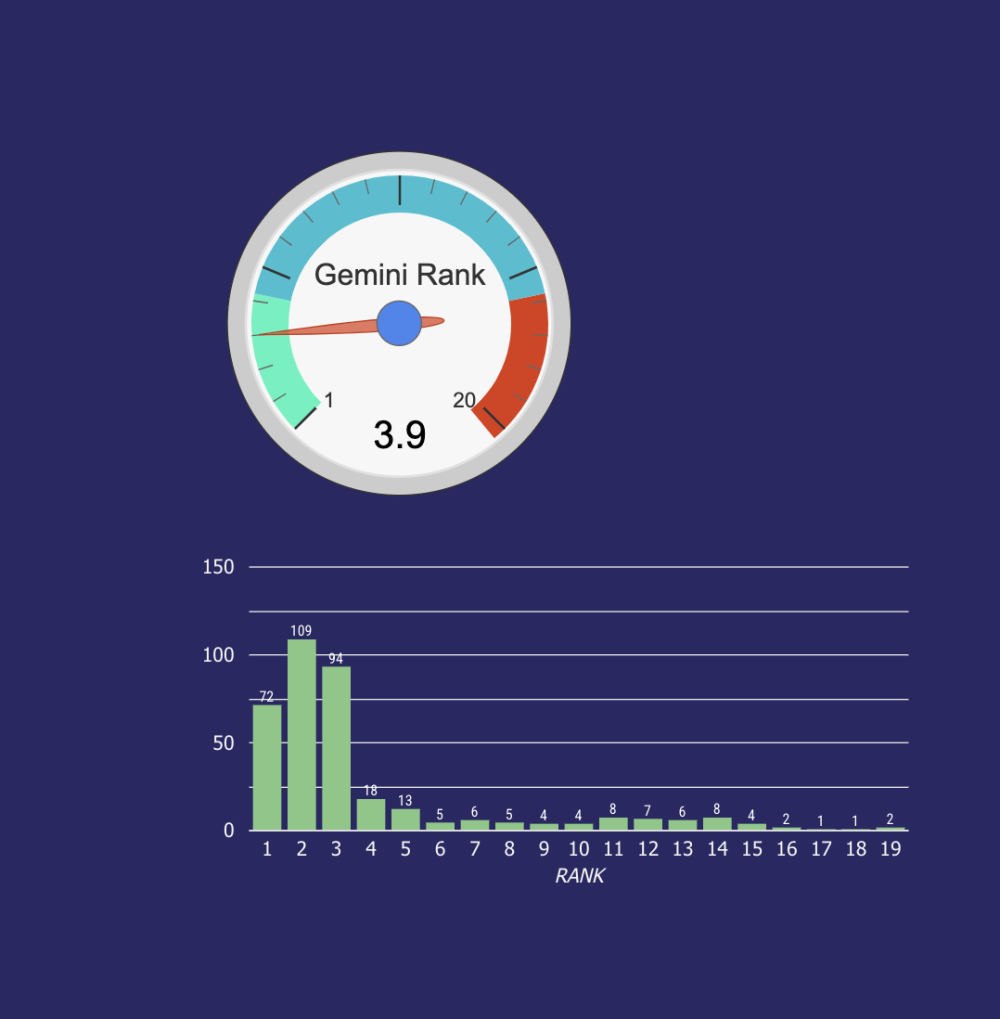
Dark blue background showing a ranking dial and bar graph. Showcasing the AI ranking tool developed by roar.

Our work

UK Estate Agent

Through applying our unique GEO framework, including focusing on semantic searches and widespread schema, 75% of benchmarked searches ranked in the top 3 and frequent presence in AI overviews on Google.

  • Structured snippets targeting user questions
  • Content targeting semantic search terms
  • Focus on referencing direct value
275
Top-3 results
3.9
Rank across 369 searches

Is AI SEO the right investment right now?

AI SEO makes most sense for businesses with solid organic foundations that want to protect or extend visibility as AI search grows.

It makes least sense for businesses with fundamental technical SEO problems, thin content, or low domain authority. Fixing the foundations comes first. Roar’s SEO service is built to do exactly that. Investing in AI SEO before that work is done means spending money on a layer that has nothing to sit on.

Some categories see AI Overviews trigger infrequently, or have buyer journeys that do not involve AI search at the consideration stage. Roar will identify whether your category is one of them before recommending any investment.

Roar’s AI visibility audit establishes where you stand before any commitment is made.

Frequently asked questions

Mostly yes. The parts that genuinely differ are content extractability, freshness discipline, and third-party presence. Everything else is standard SEO. Roar will tell you which parts you are already paying for.

They describe the same discipline. GEO (generative engine optimisation) is the most precise term. AEO (answer engine optimisation) predates current AI search tools and was originally used for voice assistants and voice search. AI SEO is the most widely searched term. Roar uses GEO because it most accurately describes the work.

Visibility percentage across repeated prompt sampling, citation frequency trends, AI referral traffic in GA4, and branded search uplift. Roar does not sell AI ranking position reports. We report what can be measured credibly and are explicit about what cannot yet be measured reliably.

Your existing programme covers the foundation that accounts for the majority of AI visibility. GEO adds content extractability, freshness discipline, third-party presence, and entity optimisation. We will tell you clearly what is already covered and what is genuinely additive.

It depends on your starting position. Content extractability improvements can be indexed relatively quickly. Building third-party presence and entity signals takes longer. We set realistic expectations at the start of every engagement, not generic timelines.

ChatGPT, Gemini, Perplexity, Google AI Overviews, Google AI Mode, and Bing Copilot. Each retrieves content differently. Our approach accounts for those differences rather than treating all platforms as equivalent.

See where you stand

Roar's AI visibility audit covers where your brand currently appears across AI platforms, where it does not, and what the gap analysis reveals. You receive useful intelligence before any commitment is made.

Contact us