Google has rebuilt Search around AI. AI Mode passed a billion monthly users, Gemini 3.5 Flash is now the default, and the whole experience is built to answer rather than to send you onwards. For marketers, this changes the job in every channel at once. Clicks are getting harder to win, ads are moving inside the AI answers, and being cited now counts for more than ranking first. Here is what shifts across SEO, PPC, and GEO.
Many marketers are still asking whether they need to worry about AI search. That is last year’s question. The Google AI search update rolled out in May 2026 has already changed how people find things, and it is already showing up in your reporting whether or not you have gone looking for it. AI Mode has passed a billion monthly users. Close to half of all Google searches now return an AI answer at the top of the page. AI search is the default experience for an enormous share of your audience.
The temptation is to treat this as an SEO problem and hand it to whoever owns organic. That misses the point. The update touches every channel a marketing team runs, and it touches them in different ways. What helps your GEO performance might do nothing for your paid efficiency. What protects your organic visibility looks different from what protects your ad spend. This piece walks through what has actually changed, then breaks down what it means for SEO, PPC, and AI search visibility in turn, before stepping back to the bigger picture for the wider industry.
What did Google actually change at I/O 2026?
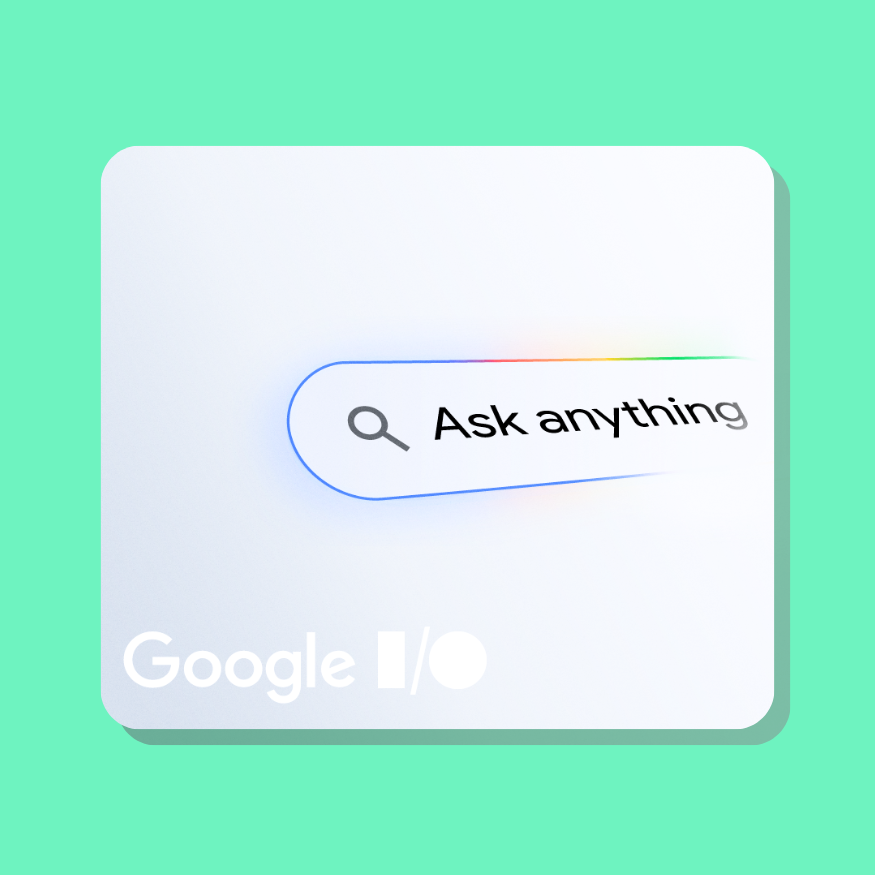
At Google I/O in May 2026, Google moved AI to the centre of Search rather than running it as a feature alongside the results. Gemini 3.5 Flash became the default model in AI Mode for everyone, the search box was rebuilt to handle longer conversational questions, and Google added agents that work in the background to monitor the web for you. AI Mode and AI Overviews now reach more than one billion and 2.5 billion users.
A few definitions before we go further, because the two terms get used interchangeably and they are not the same thing. AI Mode is Google’s conversational search experience, powered by Gemini, where you ask a question in plain language and get a synthesised answer you can keep questioning. AI Overviews are the AI-generated summary panels that sit above the traditional blue links on a normal results page.
The headline announcements break down into four parts:
- Gemini 3.5 Flash as default. The newer, faster model now powers AI Mode globally, not just for a subset of users.
- A reimagined search box. Google called it the biggest upgrade to the search box in over 25 years, built to take longer questions, images, files, and even Chrome tabs as inputs.
- Information agents. Background processes that watch the web and surface findings without being asked, pitched as the next evolution of Google Alerts.
- Generative UI. Search can now build custom layouts and interactive tools on the fly to answer a question, rolling out free to everyone over the summer.
One line from the announcement is worth holding onto. Liz Reid, Google’s VP of Search, said the new search box does not mean you will only get AI responses. So the right reading here is coexistence. The blue links are still there, but they are sharing the page with a lot more AI than they were a year ago.
There is a catch for anyone trying to measure the effect. Google began rolling out a separate core update on 21 May, in the same window as the I/O changes. That overlap makes it genuinely difficult to isolate what moved your rankings and what moved your clicks. If your Search Console numbers look strange right now, resist the urge to draw firm conclusions until both have settled.
What does the Google AI search update mean for SEO?
The update weakens the link between ranking and visibility. When an AI Overview appears, your organic click-through rate drops sharply, and a top-ten ranking no longer guarantees you get cited in the AI answer sitting above your result. SEO still matters enormously. Its job has changed: from winning the click to earning the citation.
Start with the click data, because it is stark. Seer Interactive found that organic click-through rate fell from 1.76% to 0.61% on queries showing an AI Overview, a drop of 61%, in its September 2025 study of millions of impressions. Ahrefs, analysing Search Console data over the same period, put the fall for top-ranking pages at 58%. The numbers vary by study and method, but the direction does not. When Google answers the question on the page, far fewer people click through to find it themselves.
The second shift is less obvious and arguably more important. Ranking in the top ten used to mean you were in the running for the AI citation. That is no longer reliable. The overlap between top-ten organic results and AI Overview citations collapsed from 76% in July 2025 to 38% by March 2026, according to Ahrefs data analysed by iPullRank. A page can rank first and still be left out of the answer entirely.
Here is the part worth defining, because it is doing a lot of the damage. Zero-click search is a search that ends without the user clicking through to any website, because the results page answers the question itself. For informational queries, that is now the norm rather than the exception. If your organic strategy leans heavily on explainer content, definitions, and how-to guides, that is the traffic most exposed to this change.
Not everything is in the firing line, though. Transactional and navigational queries hold up far better, because people still need to reach a website to buy, book, or sign up. AI can summarise what a good CRM looks like, but it cannot complete the purchase for the user. The practical read for SEO is to protect and prioritise the high-intent pages that still earn the click, while accepting that informational content now works harder for citations than for sessions.
So the SEO question is no longer just “are we ranking?”. It is “are we getting cited?”, and that is a different discipline with different rules.
That question is increasingly difficult to answer. Most platforms aren’t tracking AI citations yet, Search Console has just added a basic impressions counter for the AI overviews, but it doesn’t give you an insight into what AI actually says about you to customers who ask.
So rather than waiting around for a tool that doesn’t, and might never exist. We built our own. The Search Radar will run a detailed report on your organic and AI visibility, tell you who your competitors are and answers the most valuable question in Search mareting right now: Would AI recommend your product/ service?
Try it for yourself: Roar Search Radar (no logins or email capture required)
What does the Google AI search update mean for PPC?
Google is putting ads inside the AI answers. Paid search is becoming a placement within AI Mode and AI Overviews, rather than a separate auction sitting below the organic links. Your existing Shopping and Performance Max campaigns can already appear in these placements with no new setup, which means you might be showing up there now without realising it.
The monetisation has moved fast. Ads appeared in 5.17% of AI Overview results in early 2025. By the first quarter of 2026 that had reached 25.5%, according to Digital Applied. Google is also testing formats built specifically for the AI surface: Sponsored Stores inside product panels, and Direct Offers that drop a discount straight into the generated answer. Both run through Shopping and Performance Max, so the inventory is live whether or not you have opted into anything new.
Performance Max, for anyone who has avoided it so far, is Google’s automated campaign type that serves ads across all of Google’s inventory from a single campaign, with Google’s AI deciding placement and bidding. That automation is the direction of travel. Placement in AI Mode leans on conversational intent, feed quality, and landing page relevance more than on exact-match keywords, so the manual levers many account managers grew up on carry less weight than they used to.
The cost story is the one to brief your finance team on. As AI answers absorb the cheap, exploratory clicks at the top of the funnel, the remaining demand concentrates into fewer, higher-intent queries. Those queries get more competitive, and competition pushes cost per click up. You are paying more for a smaller pool of clicks that are closer to converting. That can still be efficient, but the blended numbers will look different, and the change is worth getting ahead of before the quarterly review does it for you.
The job for paid media now is partly about feed and creative quality, because that is what earns the new placements, and partly about reading rising CPCs as a structural shift rather than a seasonal blip. This has only increased the necessity for a Paid media agency, or PPC manager if you have multiple campaigns running at once. The old rules just don’t apply anymore.
What does the Google AI search update mean for AI SEO and GEO?
GEO, or generative engine optimisation, is the practice of structuring content so that AI engines can read, extract, and cite it in their answers. It has become the discipline that holds visibility together as clicks decline, because being named in an AI answer is now the closest thing to ranking first. The mechanics differ from traditional SEO in a way that matters, and understanding why is the difference between guessing and knowing.
GEO and AI SEO get used to mean the same thing, and for practical purposes they do: optimising for ChatGPT, Perplexity, Gemini, and Google’s AI answers rather than for the ten blue links. The reason it needs its own name is that the retrieval works differently, and the old SEO playbook only gets you part of the way.
The I/O update is exactly what moves GEO from a sensible idea to an urgent one. Every change Google announced makes the AI answer bigger and the blue links smaller. Gemini 3.5 Flash powers more capable summaries, the rebuilt search box pushes people towards longer conversational questions, and generative UI lets Search build a whole answer on the page instead of pointing elsewhere. Each of those gives the user one more reason to stay inside the answer, and the only way to be present in that answer is to be cited in it.
That is the shift in plain terms. The update has turned the AI answer into the main event on the page, so the question is no longer only whether you rank near the top of the links underneath it. It is whether you appear in the answer itself. GEO is how you compete for that space, and the I/O changes are what make it the space that counts.
How does AI decide what to cite?
The key mechanism is query fan-out. Query fan-out is the process where an AI engine takes one question, generates several related sub-queries, runs them in parallel, and assembles its answer from the best passage it finds for each. So a single search becomes a cluster of searches behind the scenes, and the engine pulls the strongest passage for each one.
This is why a top ranking no longer guarantees a citation. Your page might answer the main question well and miss the sub-questions entirely. A competitor who covers one of those sub-queries in a tight, quotable passage gets pulled into the answer, and you do not, regardless of who ranks higher. The unit of visibility has shrunk from the page to the passage.
That changes what good content looks like. The goal is no longer one comprehensive page that ranks. It is a set of clear, self-contained passages that each answer a specific question well enough to be lifted out and cited.
What actually improves your citation odds?
A handful of signals do the heavy lifting. None of them are exotic, but they reward a different kind of discipline than ranking ever did:
- Extractable answers. Lead each section with a direct, self-contained answer that makes sense lifted out of context. If a passage needs the paragraph above it to make sense, the engine will skip it.
- Structured data. Schema markup tells the engine what your content is without making it work for the meaning. FAQ, HowTo, and Article schema map cleanly to how AI answers are assembled.
- Topical depth. Covering a subject from every relevant angle gives the fan-out more passages to match against. Thin coverage gives it nothing to pull.
- Brand mentions. Being talked about across the web, not just on your own site, builds the entity authority that makes engines treat you as a credible source to cite.
- Freshness. AI answers favour current information. Content that gets meaningfully updated holds its citation eligibility far better than content published once and left alone.
There is real commercial upside here, which is worth saying plainly because GEO often gets framed as damage control. Brands cited in AI Overviews earn 35% more organic clicks and 91% more paid clicks than those left out, according to Seer Interactive’s September 2025 analysis. The citation is not just visibility for its own sake. It pulls clicks and conversions with it.
Google itself is reinforcing the citation layer. In May 2026, it brought Preferred Sources and Highly Cited labels into AI Overviews and AI Mode, and reported that people are twice as likely to click through to a source they have marked as preferred. The signal from Google is clear enough: who gets cited, and how visibly, is becoming the game. Getting GEO right is how you make sure it is you.
What does the Google AI search update mean for the wider marketing industry?
The update weakens the long-held assumption that owned content plus Google traffic is a reliable growth engine, so the wider effect is a rebalancing towards channels marketers genuinely control. As organic clicks become less predictable, brand building, owned audiences such as email, and presence on trusted third-party platforms move from useful to essential. Search is becoming an answer layer, and marketing strategy now has to plan for visibility without a guaranteed click at the end of it.
The publisher numbers are the clearest early warning. HubSpot estimates it lost 70 to 80% of its organic traffic, Chegg reported a 49% decline, and NPR called the shift an extinction-level event for online news publishers. Lily Ray of Amsive warned that the I/O changes would have a severe impact on the open web. These are the businesses most dependent on organic clicks, so they feel the change first and hardest. The rest of the market is on the same curve, just further back.
What follows from that is a shift in how success gets measured.
How does measurement change, from clicks to citations?
The headline metrics are moving from clicks and sessions towards citation presence and share of voice. Share of voice, in an AI search context, is how often your brand appears or is cited across the AI answers relevant to your market, measured against competitors. Traditional analytics undercount this badly because they only record the sessions that end in a click. A brand can be named in thousands of AI answers and see almost none of it in Google Analytics.
That gap is the reason citation tracking is becoming its own reporting line. If you only measure what lands on your site, you are blind to most of your AI visibility, and you cannot manage what you cannot see. Building a clear view of where you are cited, and where competitors are cited instead, is fast becoming part of standard benchmarking.
Why do owned channels and brand matter more now?
When borrowed reach gets less reliable, owned reach gets more valuable. Email lists, communities, and direct audiences are not subject to Google’s latest change to the results page, which makes them steadier ground to build on. The brands investing in these now are reducing their dependence on a single channel they do not control.
Brand strength also feeds straight back into AI visibility. Engines lean on entity authority when they decide who to cite, and entity authority is built on being known, mentioned, and trusted across the web. So brand building is doing double duty: it brings people to you directly, and it makes the AI answers more likely to name you. The response to all of this is joined up rather than channel by channel, which brings us back to where we started.
Conclusion
The Google AI search update is a structural change, not a feature you can choose to ignore. It is already in your data, reshaping how every channel performs at the same time.
The three takeaways are worth holding together rather than in isolation. SEO now has to earn citations as well as clicks, and informational content is the most exposed. PPC is moving inside the AI answers, with cheap exploratory clicks drying up and CPCs rising on the high-intent queries that remain. GEO has become the discipline that decides whether you appear in the answer at all, which is fast becoming the part of the page that counts.
No single fix covers all of this. A team that hands AI search to whoever owns organic, and treats the rest as business as usual, will keep losing ground without quite knowing why. The work now is to read the update as what it is: one change with consequences across the whole marketing function, answered with one joined-up response.
Frequently asked questions
What is the difference between AI Mode and AI Overviews?
AI Overviews are the AI-generated summaries that appear above the normal search results on a standard results page. AI Mode is a separate, fully conversational search experience where you ask questions in plain language and keep the conversation going with follow-ups. Both are powered by Gemini, and both can now carry ads and citations.
Is SEO dead because of AI search?
No. SEO still underpins AI visibility, because AI engines draw heavily on organically ranking content to build their answers. What has changed is the goal. SEO now has to earn citations and serve high-intent queries, rather than chasing clicks from informational keywords that the AI answers on the page.
Will AI search reduce my organic traffic?
For informational content, very likely. When an AI Overview appears, organic click-through rate drops sharply, and zero-click searches have become the norm for many informational queries. Transactional and navigational queries are far less affected, because people still need to reach a website to buy, book, or sign up.
Do ads still work in Google’s AI search?
Yes, and Google is expanding them. Ads now appear inside a growing share of AI Overviews and within AI Mode, served through existing Shopping and Performance Max campaigns. The main shift is cost. As cheap exploratory clicks decline, spend concentrates into high-intent queries, and CPCs tend to rise.
What is GEO and do I need it?
GEO, or generative engine optimisation, is the practice of structuring content so that AI engines cite it in their answers. If any meaningful share of your audience uses AI search, then you need it, because citation is becoming the equivalent of ranking first. It builds on strong SEO rather than replacing it.
How do I measure success in AI search?
Shift the focus from clicks and sessions towards citation presence and share of voice, meaning how often your brand is named or linked across the AI answers relevant to your market. Traditional analytics tend to undercount AI visibility, because they only capture the sessions that end in a click.